
Material, explained
LIU or patch panel?
Do I need an LIU or a patch panel?
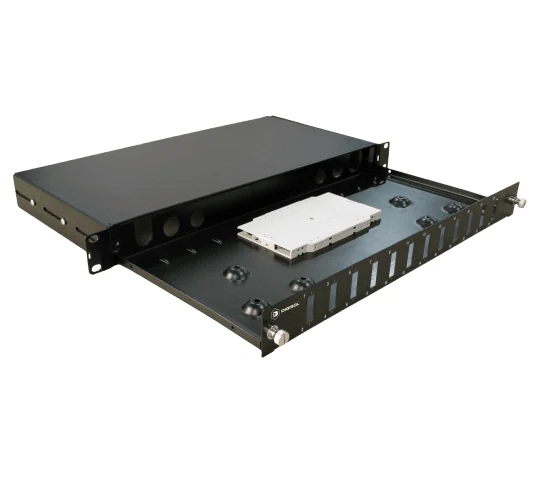
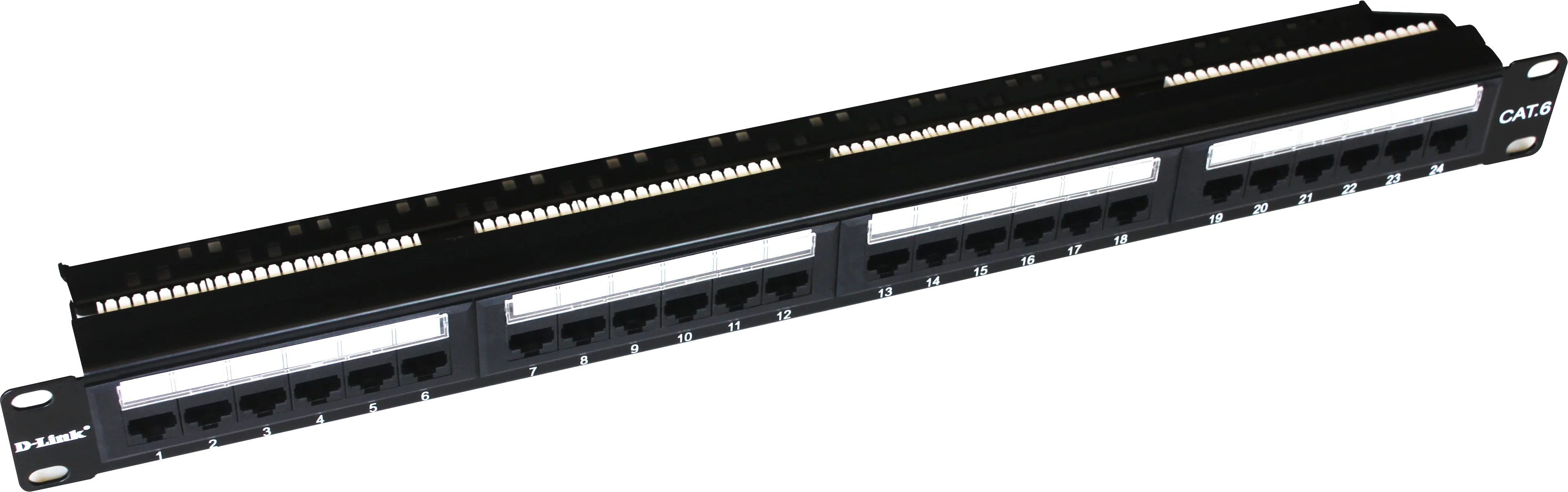
Fibre ends in an LIU, copper ends in a patch panel, and a rack carrying both needs both. An LIU protects splices and presents optical adapters; a patch panel presents punched-down copper as RJ45. Neither substitutes for the other, and a schedule that lists only one for a mixed floor is a schedule that is short a component.
Both are defined by ANSI/TIA-568.3-D for the optical side and ANSI/TIA-568.2-D for the copper, published by TIA.
How this verdict was reached
- What the published standard settles
- What it costs to install
- What it costs to specify wrongly
- Whether both sides can be supplied from this catalogue
How every verdict on these six pages was reached, in the order the criteria were weighed. Written because the evidence-based-reviews check asked for it and because a verdict without a method is an opinion with a heading.
1. Does the published standard settle it? Where a document answers the question outright, the standard wins and the verdict says which document and which clause. Cat 6A carries 10 Gigabit to 100 metres because ANSI/TIA-568.2-D says so; nothing here is entitled to a second opinion about that.
2. What does it cost to install? Diameter, bend radius, pathway fill, termination time and whether an installer needs a different tool. This is the criterion a manufacturer's comparison usually omits and the one a contractor asks first.
3. What does it cost to get wrong? Asymmetric almost every time. Specifying Cat 6A where Cat 6 would have done wastes money once. Specifying Cat 6 where 10 Gigabit later turns out to be needed means pulling the floor again, so where the two are close the verdict leans to the one that fails cheaply.
4. Can both sides actually be supplied? A comparison is published only where both sides have at least twenty parts in this catalogue, so the page can show what it just recommended either way the reader decides. This is why there is no OM3 against OM4 page.
Not used, deliberately: margin. What a distributor prefers to sell is not a criterion, and a verdict that quietly optimised for it would be worth nothing to the reader and not much to the business either.
Side by side
| What is compared | LIU and ODF | Patch panel |
|---|---|---|
| What terminates in it | Optical fibre, spliced or pre-terminated | Twisted-pair copper, punched down |
| Front face | SC, LC or MPO adapters | RJ45 keystone jacks |
| What it protects | Splice trays and bend radius | The fixed link from re-termination |
| Sized by | Core count | Port count |
| Typical height | 1U to 4U depending on cores | 1U or 2U for 24 or 48 ports |
| Specify it when | Any fibre enters the rack | Any copper run terminates in the rack |
LIU and ODF, on the shelf
- 6 Core Fiber Distribution Frame DGF-DFXXXX-06
- 12 Core Fiber Distribution Frame DGF-DFXXXX-12
- 24 Core Fiber Distribution Frame DGF-DFXXXX-24
- 4 Core Fibre Adapter Panel / LIU Plate NPL-FXDSC-04-BL
- 6 Core Fibre Adapter Panel / LIU Plate NPL-FXXSC-06
- 6 Core Fibre Adapter Panel / LIU Plate, LC Connector (NPL-FXDLC-06) NPL-FXDLC-06
- Fibre LIU / ODF (DGF-LXXXUXX-1CD) DGF-LXXXUXX-1CD
- Fibre LIU / ODF (DGF-LXXXUXX-2CD) DGF-LXXXUXX-2CD
- Fibre LIU / ODF (DGF-LXXXUXX-2D) DGF-LXXXUXX-2D
- Fibre LIU / ODF Unit (LIU-6P-1) LIU-6P-1
- Fibre LIU / ODF Unit (LIU-12P-1) LIU-12P-1
- Fibre LIU / ODF Unit (LIU-24P-1) LIU-24P-1
Patch panel, on the shelf
- Solderless Patch Panel 24-Port Cat6 UTP DGC-PP6U2L-1B-SL
- 8 Port Cat 6 Patch Panel, 1U, Black NPP-C61BLK081
- 24 Port Cat 5e Patch Panel, 1U, Black NPP-5E1BLK241
- 24 Port Cat 6 Patch Panel, 1U, Black NPP-C61BLK241
- 24 Port Cat 6 Patch Panel, 2U, Black NPP-C62BLK241
- 24 Port Cat 6A Patch Panel, 1U, Black NPP-6A1BLK241
- 24 Port Cat 6A Patch Panel, 2U, Black NPP-6A2BLK241
- 48 Port Cat 6 Patch Panel, 1U, Black NPP-C61BLK481
- 110Connect XC System Category 5e Rack Mount Panel Assembly, 1U, xc wiring block, 100 pair, black 558635-1
- 110Connect XC System Category 5e Rack Mount Panel Assembly, 2U, xc wiring block, 200 pair, ivory 558637-1
- Cat 5E/6/6A Shielded 24-port Unloaded Angled Jack Panel, 1U 760237048
- Cat 5E/6/6A Shielded 24-port Unloaded Straight Jack Panel, 1U 760237046
Other choices we get asked about
Still not sure which the job needs? Describe the run and our team will tell you, and quote it.
Data Systems · +91 99595 55222 (call or WhatsApp) · 040-27811708 · admin@datasystems.co.in · Secunderabad (HQ) · Vijayawada · Visakhapatnam · Mon to Sat, 9:30 to 7
Some images on this site were created with AI and the item supplied may not look exactly as shown. The part code, not the picture, decides what ships.
Corrections and editorial policy · Privacy · Terms · Material, explained · Brands